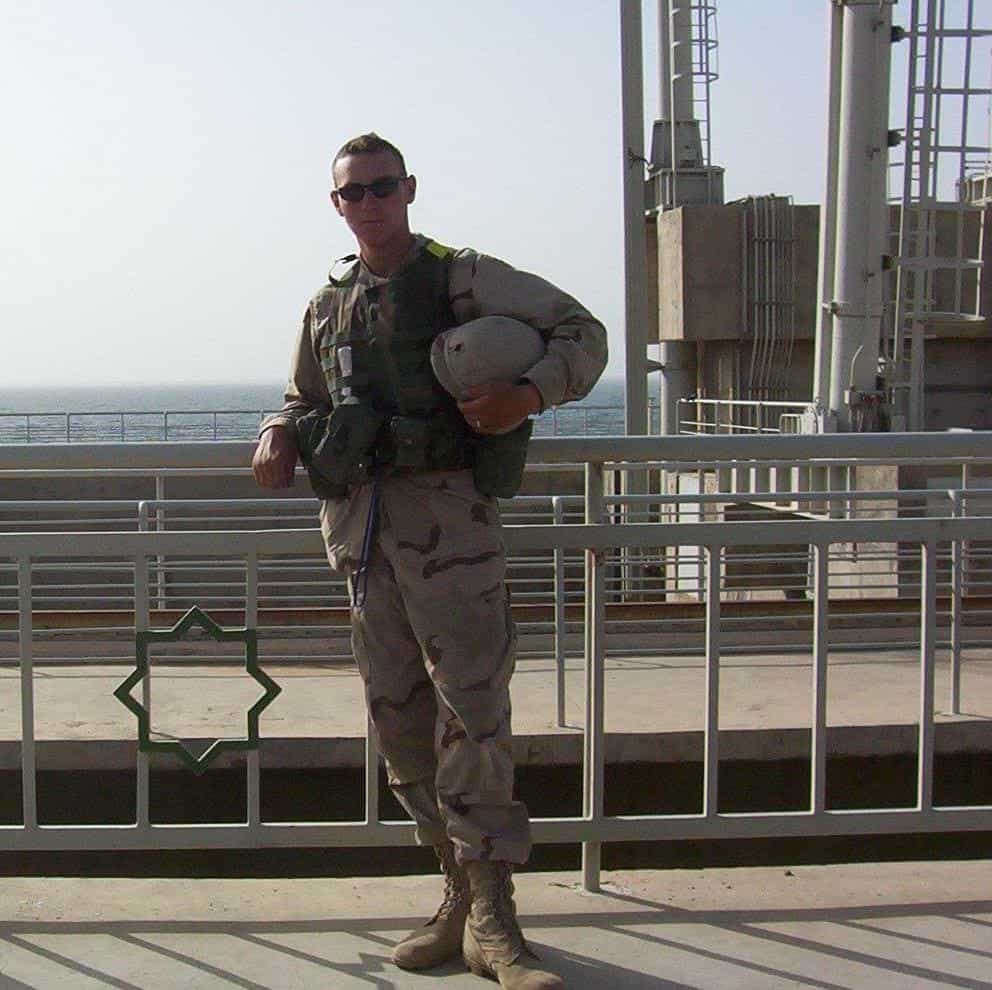
Shane Farlin and his unit completed a mission to provide ammunition and fuel to troops while deployed with the Army National Guard during Operation Iraqi Freedom in 2004. Upon their return, they experienced what he recalls as a “strange lull in activity.”
Farlin manned an M249 machine gun as they proceeded on their journey back to camp the next day when the calm quickly turned to chaos as a mortar hit the vehicle he was riding in, and Iraqi insurgents brutally ambushed their convoy.
“The right side of my face was caved in, and my right eye was dangling,” Farlin vividly described the gruesome scene. “I had shrapnel down the whole right side of my body and was only still alive because we had bolted extra steel and plexiglass to the side of the vehicle.”
While Farlin remembered that he was conscious throughout the raging battle, he wasn’t able to see out of either of his eyes.
“As they got me out of the kill zone and a chopper came to airlift me, they kept yelling for me to hang on,” he said. “I lost so much blood that they had to revive me.”
National Purple Heart Day
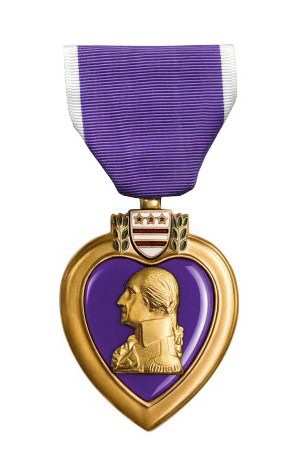
August 7 marks National Purple Heart Day commemorating the 1.8 million military personnel since 1782 who have received the esteemed award for being wounded or killed in action.
With Farlin standing at attention, chin high, chest out, an Army National Guard Brigadier General pinned the famous purple grosgrain medal with the gold heart emblazoned with the likeness of George Washington’s face to his chest at state headquarters in Lansing in July of 2004.
“The Purple Heart is a strange medal. While it’s beautiful and an absolute honor to receive, it’s one of those you hope you never get. It’s not something you’re trying to earn. You’re just doing your job,” explained Farlin.
The Michigan native remained blind for a month after the attack, eventually regaining sight in his left eye while completely losing sight in his right, even after numerous surgeries. Even though it’s been 20 years since the injury, he still suffers from traumatic brain injury, chronic pain, and PTSD.
“The first ten years were the worst. I needed to find purpose. Now I own my own asphalt company, and I’m taking the leadership skills I learned in the military and mentoring my employees and giving opportunities to young men and women who are struggling,” he said.

And it’s that asphalt company that introduced the VFW National Home to Farlin. In preparation for the 100th anniversary of the Home, the facilities crew is making campus improvements by resurfacing asphalt, replacing curbs, and restriping the roads and parking lots. A lifetime member of the VFW, Farlin was recommended to the National Home Facilities department for the work.
“Shane was a member of one of my units when I was actively serving as a Command Sergeant Major. I recall the report given that he had been injured and the ceremony for which he received the Purple Heart Medal,” says Michael Wilson, Executive Director of the VFW National Home. “He was devastated not because of his wounds but because he would no longer be able to serve, something that was very important to him. To see him on our campus thriving and giving back to veterans and his community swells me with pride.”
The History of the Purple Heart
George Washington established what was originally called the Badge of Military Merit on August 7, 1782, in an effort to encourage his troops by establishing an award for valor and meritorious service. Only three sergeants in his army received what was then just a purple ribbon.
From that time, 150 years went by, and in 1932, General Douglas MacArthur revived Washington’s original idea and renamed it the Purple Heart, granting it to 78,000 army veterans going back as far as the Civil War, many receiving it posthumously.
After the fateful day of December 7, 1941, at Pearl Harbor that catapulted the United States into World War II, President Franklin D. Roosevelt expanded the award to be granted to any military personnel from any branch of the service who were wounded or killed in action.
In commemoration of National Purple Heart Day, the VFW National Home honors and thanks Farlin and all those who possess a Purple Heart for their valor and merit in serving our country.
Source
The History of the Purple Heart (2021, Aug. 6). https://www.nationalww2museum.org/war/articles/history-of-the-purple-heart#:~:text=Apart%20from%20the%20Medal%20of,has%20gone%20through%20many%20changes.